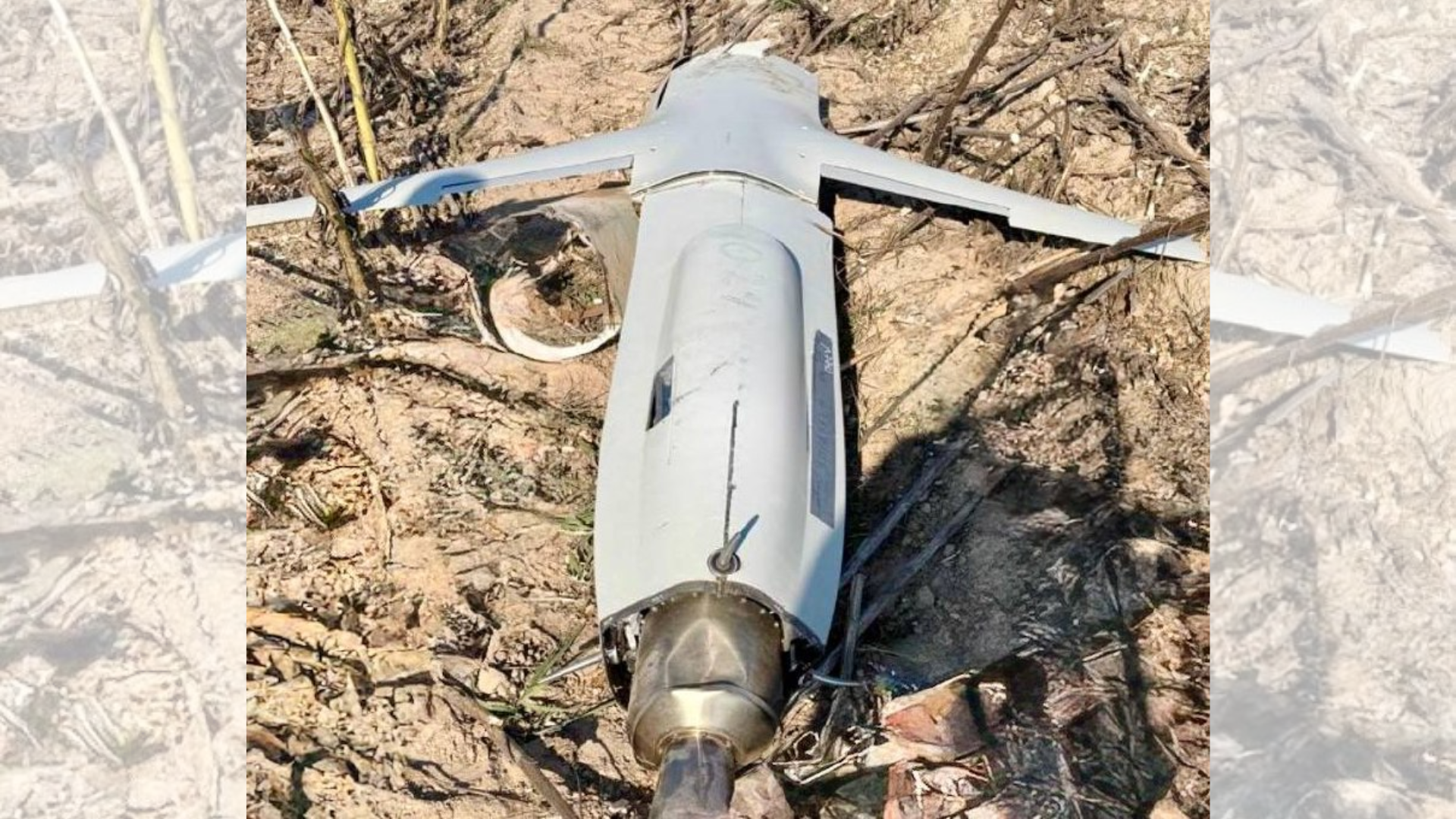
The Filin missile, which was deployed between late September and early October of this year, reportedly used 3D-printed and commercial parts to save on cost. It boasts increased speeds up to 500 mph and a range of over 700 miles, making it a challenging target for Ukrainian air defenses.
(Image credit: Serhii Sternenko/Telegram ) Copy link Facebook X Whatsapp Reddit Pinterest Flipboard Email Share this article 0 Join the conversation Follow us Add us as a preferred source on Google Newsletter Subscribe to our newsletter Ukraine’s military intelligence agency GUR released details of a new 3D-printed Russian cruise missile that was first deployed around September and October of this year. The missile is faster than traditional weapons, hitting speeds of 500mph, and has a range of over 700 miles. According to Business Insider , these cruise missiles, called “Filin,” are more affordable than the traditional Kh-101 cruise missile that costs more than $2,000,000 per launch. This is why some fear that these weapons would be used by the Russian military in “missile spam” tactics against Kyiv to overwhelm its air defenses. Russia’s invasion of Ukraine, which was originally planned to last just a few weeks, has turned into a multi-year war of attrition. This has made the frontlines a costly effort for both man and machine, which is why both sides are looking for more cost-efficient ways to conduct warfare. While drones have seen widespread use in this conflict, they’re relatively slow and are easier to shoot down. The Geran-5, which has been known to disintegrate in flight , could only hit a maximum speed of 270 mph, while the Filin can reportedly hit speeds of 500 mph and has a range of 745 miles. While this still isn’t as fast as modern fighter jets like the F-16 Fighting Falcon, the increased top speed could make it that much harder for Ukrainian air defenses to deal with the threat. The GUR said that the Filin has a carbon and fiberglass fuselage, while also featuring some 3D-printed parts. It also said that Moscow was able to keep costs on the cruise missile low by relying on commercially available parts from both domestic and foreign companies. It used Russian-made engines instead of the Chinese turbojets found in many Shahed drones, while many electronic components, such as the flight controller, inertial navigation systems, equipment controllers, and counter-jamming hardware, are said to come from Western nations and their allies. The Ukrainian intelligence agency listed the following sources: 35 components come from the U.S., 22 from China, and 13 from Japan, Switzerland, Taiwan, and the Netherlands.