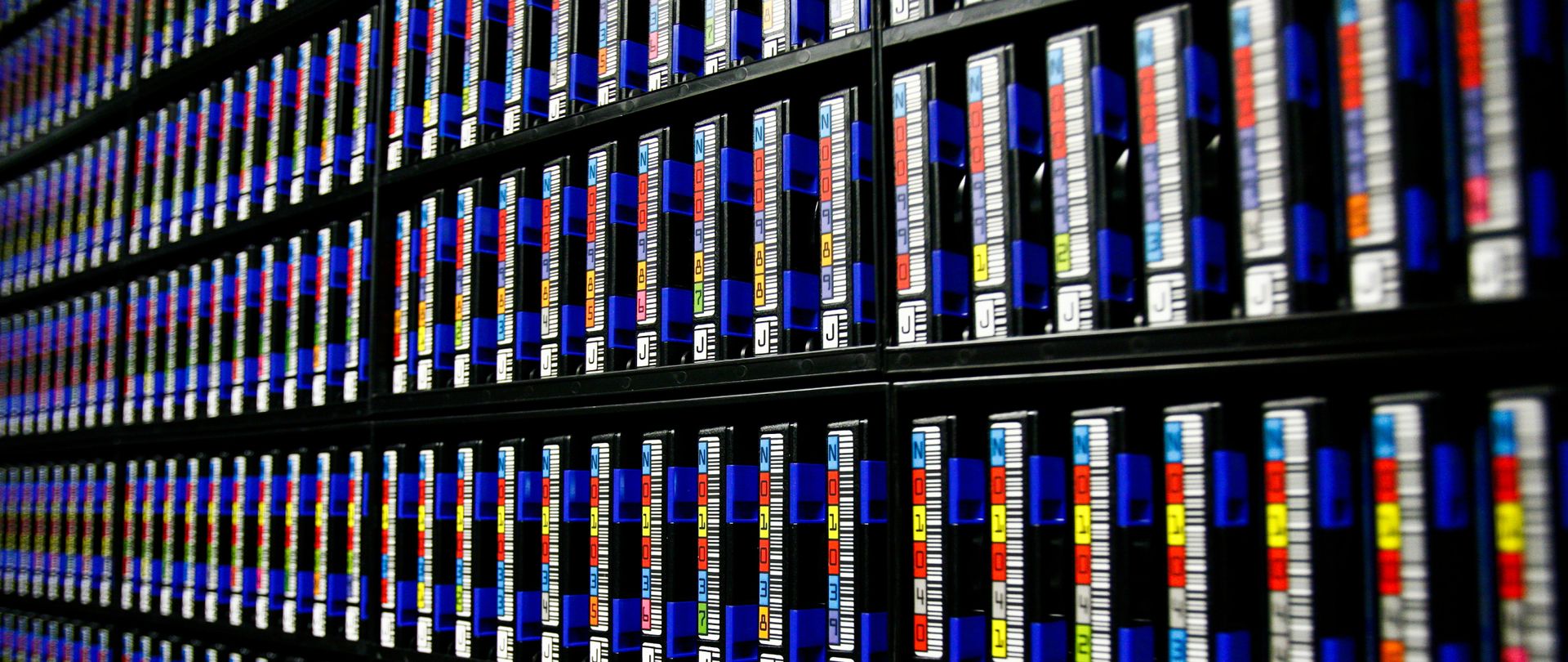
Despite all odds, the AI boom is increasing relevance of tape storage as technology enables cheap storage with zero power consumption in idle and ultimate security with air gap.
(Image credit: Getty Images / Houston Chronicle / Heart Magazines) Copy link Facebook X Whatsapp Reddit Pinterest Flipboard Email Share this article 0 Join the conversation Follow us Add us as a preferred source on Google Newsletter Subscribe to our newsletter In a world where SSDs with up to 256TB capacity are about to enter the scene to compete against hard disk drives that store over 40TB, magnetic tape storage may seem archaic. However, the 25-year-old Linear Tape-Open (LTO) format continues to evolve at a rather impressive pace. The current LTO-10 generation stores up to 40TB of uncompressed data per cartridge, while HPE, IBM , and Quantum — the companies behind the LTO Program — now envision LTO-14 cartridges with up to 365TB of native capacity. But capacity is not the only advantage of LTO. In fact, the consortium has deliberately slowed its capacity roadmap in a bid to prioritize reliability, cost per terabyte, and manageable backup and recovery times over the previous goal of doubling capacity with every generation. LTO began in 2000 with the LTO-1 format, which stored just 100GB of data natively and transferred it at 20 MB/s. Since then, capacity increased to 200GB with LTO-2, 400GB with LTO-3, 800GB with LTO-4, 1.5TB with LTO-5, 2.5TB with LTO-6, 6TB with LTO-7, 12TB with LTO-8, and 18TB with LTO-9. Therefore, modern LTO has at least two major scaling vectors: manufacturers can record more bits on a given area of tape, and can put more tape into a cartridge. Meanwhile, with LTO-10, the consortium had to drop backwards compatibility, which we will detail further within this article.